
How to Prepare for Your First In-Home Wound Care Visit
How to Prepare for Your First In-Home Wound Care Visit
Transitioning to in-home wound care is a significant step toward healing in the comfort of your own environment. Whether you are recovering from a surgical procedure, managing a chronic condition like diabetic foot ulcers, or dealing with a traumatic injury, having professional care delivered to your home can reduce stress and improve outcomes.
If you reside in Miami-Dade County, Wound Care Miami-Dade connects you with licensed, insured in-home wound care providers. To ensure your first visit goes as smoothly as possible, a little preparation can make a big difference. This guide will walk you through what to expect and how to get ready for your initial appointment.
Gathering Necessary Documents
Your in-home wound care provider will need a comprehensive understanding of your medical history and current health status. Having your documents organized before the visit will save time and ensure accurate care. Please prepare the following:
- Physician Orders: A copy of the specific wound care orders from your primary care physician or surgeon.
- Hospital Discharge Papers: If you recently returned home from the hospital or a skilled nursing facility, these papers provide crucial context.
- Insurance Cards: Your Original Medicare Part B, Preferred Care Partners, UnitedHealthcare Dual Complete, or WellCare card, along with any secondary insurance information.
- Emergency Contacts: A list of family members or friends who should be contacted in case of an emergency.
The Medicare.gov home health resources page provides further details on what documentation is typically required for covered services.
Preparing Your Medication List
Medications can significantly impact wound healing and interact with treatments. Create a complete and up-to-date list of all medications you are currently taking. This list should include:
- Prescription medications (including dosages and frequency)
- Over-the-counter drugs (like pain relievers or allergy medicine)
- Vitamins, minerals, and dietary supplements
- Herbal remedies
Be sure to note any known allergies, especially to medications, latex, or specific types of medical tapes and adhesives. The National Institute on Aging offers excellent templates and advice for organizing medical information and medication lists.
Setting Up a Care Space at Home
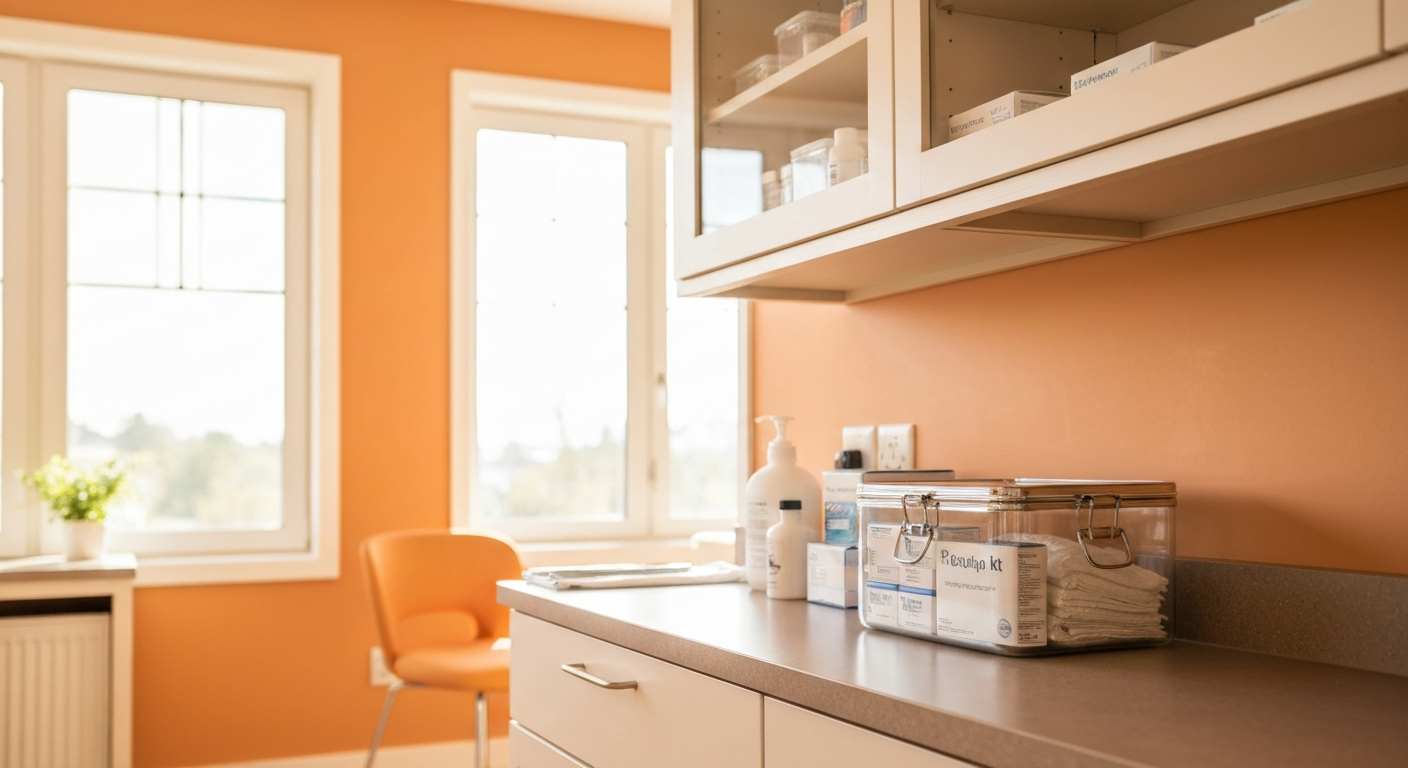
Creating a clean, well-lit, and comfortable environment for your wound care treatments is essential for safety and efficiency. Choose a location in your home, such as a sturdy bed or a comfortable recliner, where you can easily position yourself for the provider to access the wound.
Here are some tips for setting up your care space:
- Lighting: Ensure the area is brightly lit so the clinician can accurately assess the wound. A nearby lamp can be very helpful.
- Cleanliness: Keep the area free of clutter, dust, and pet hair. It is advisable to keep pets in another room during the visit to maintain a sterile environment and prevent distractions.
- Accessibility: Clear a pathway so the provider can easily bring in their equipment and supplies. If you live in an apartment or condo in Miami, ensure the provider has clear instructions for parking and building access.
- Supplies: If you have already received wound care supplies from a pharmacy or durable medical equipment provider, place them near the care space.
Questions to Ask the Clinician
Your first visit is an excellent opportunity to establish clear communication with your wound care provider. Don't hesitate to ask questions to fully understand your treatment plan. Consider writing down your questions beforehand so you don't forget them. Some important questions to ask include:
- What are the specific goals of my wound care plan?
- How often will you be visiting?
- What signs of infection should I watch for between visits?
- Can I shower or bathe with this dressing?
- Are there any dietary changes that could help my wound heal faster?
- What should I do if the dressing comes loose or gets wet?
What Happens During the First Visit?
The initial in-home wound care visit is typically longer than subsequent visits, as it involves a comprehensive assessment and the establishment of a care plan. Here is a general overview of what you can expect:
1. Initial Assessment and Introduction
The licensed provider will introduce themselves, review your medical history, and verify your physician's orders and insurance information. They will also assess your overall health, taking vital signs such as blood pressure, heart rate, and temperature.
2. Wound Evaluation
The provider will carefully remove any existing dressings and thoroughly examine the wound. They will measure its length, width, and depth, and document its appearance, including the color of the tissue and the amount and type of drainage. They may also take a photograph of the wound for your medical record to track healing progress over time.
3. Treatment and Dressing Application
Based on the physician's orders and their assessment, the provider will clean the wound and apply the appropriate dressing or treatment. They will explain each step of the process to ensure you are comfortable and informed.
4. Education and Care Plan Review
Before leaving, the provider will discuss the ongoing care plan with you and your family or caregivers. They will educate you on how to protect the wound, signs of complications to watch for, and any necessary lifestyle adjustments. They will also schedule your next visit.
The Role of Wound Care Miami-Dade
Wound Care Miami-Dade is a referral service dedicated to connecting patients with highly qualified, licensed, and insured in-home wound care providers. We do not employ or manage the clinicians directly; rather, we facilitate the connection to ensure you receive prompt and professional care that meets your specific needs.
Our network of providers is experienced in managing a wide range of complex wounds and works closely with your primary physician to follow established clinical guidelines.
Ready to Start Healing?
Preparing for your first in-home wound care visit can help alleviate anxiety and set the stage for a successful healing journey. By gathering your documents, organizing your medications, setting up a proper care space, and preparing your questions, you empower yourself as an active participant in your recovery.
If you or a loved one in Miami-Dade County needs to arrange for professional in-home wound care, Wound Care Miami-Dade is here to help. We connect you with trusted providers who accept major Medicare plans, ensuring you get the expert attention you deserve without the hassle of searching on your own.
REQUEST A CALL: (786) 882-2666