
Wound Care Equipment and Supplies: What Miami-Dade Patients Need at Home
Wound Care Equipment and Supplies: What Miami-Dade Patients Need at Home
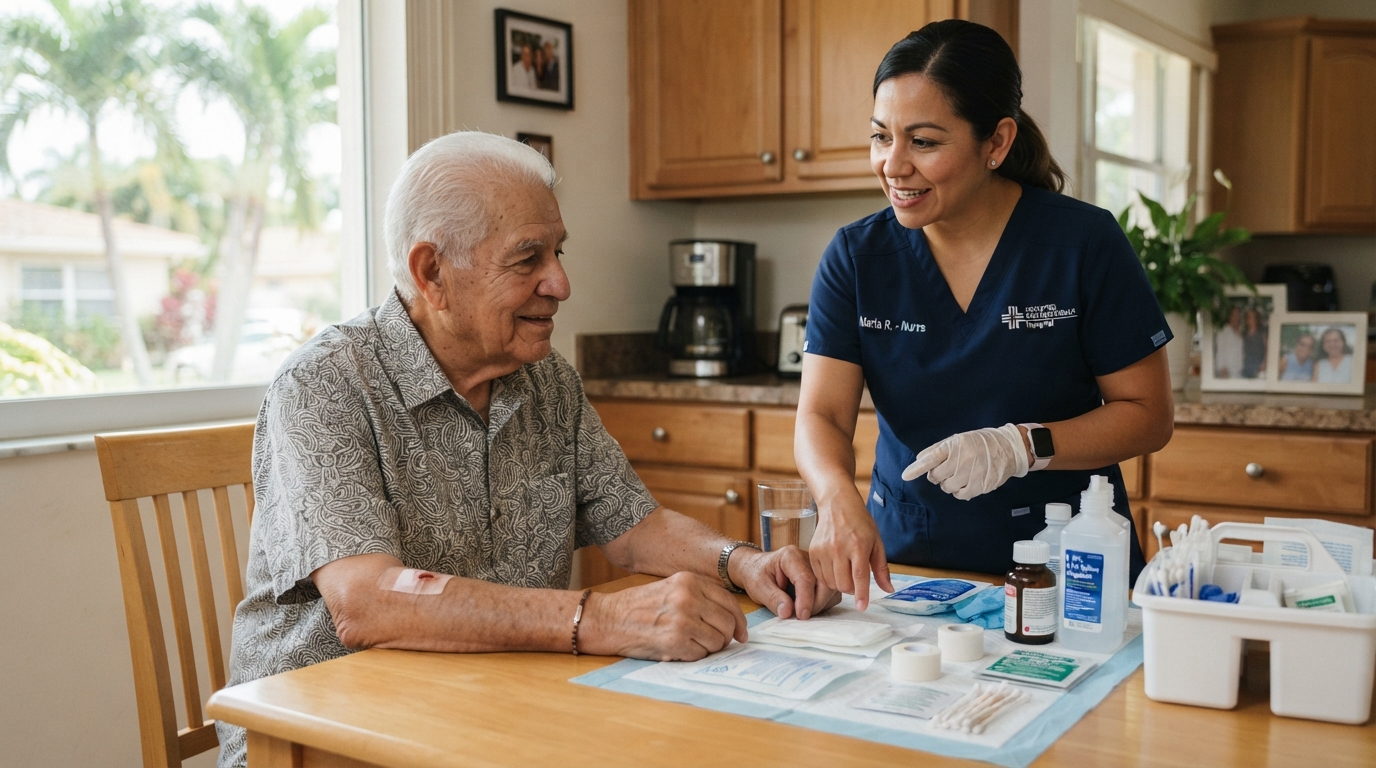
When a family member begins receiving in-home wound care, one of the first practical questions is what supplies and equipment to keep on hand. Having the right items ready makes dressing changes smoother, keeps the wound environment clean, and reduces stress for both the patient and the caregiver. Running out of critical supplies mid-week can lead to delayed care and anxiety.
This guide covers the essential wound care supplies and equipment that Miami-Dade families should have available. Wound Care Miami-Dade connects patients with licensed, insured in-home providers who bring professional-grade supplies and manage the entire care process, but understanding what is involved helps families feel prepared.
Basic Wound Care Supplies
These are the foundational items that most wound care regimens require. Your nurse will tell you exactly which ones apply to your loved one's specific wound.
1. Sterile Gloves
Sterile gloves are essential for preventing contamination during dressing changes. They create a barrier between the caregiver's hands and the wound, reducing the risk of introducing bacteria. Keep a box of the correct size on hand at all times.
2. Saline Solution
Normal saline (0.9 percent sodium chloride) is used to clean wounds safely without damaging healthy tissue. It is the gold standard for wound irrigation because it is isotonic, meaning it will not harm cells. Sterile saline comes in squeeze bottles or spray cans for easy application.
3. Gauze Pads and Rolls
Sterile gauze pads are used to clean the wound, apply medication, or absorb drainage. Gauze rolls secure dressings in place. Keep a variety of sizes, such as 2x2 inch and 4x4 inch pads, to accommodate different wound sizes.
4. Medical Tape
Medical tape secures dressings to the skin. There are several types, including paper tape (gentle on fragile skin), cloth tape (more durable), and silicone tape (reusable and leaves no residue). In South Florida's humidity, a stronger adhesive may be needed to keep dressings in place.
5. Wound Cleansers
Beyond saline, your physician may order specific wound cleansers that help remove debris or reduce bacterial load. These should only be used as directed by the wound care provider.
Advanced Dressing Materials
Depending on the wound type and stage, the in-home nurse may use specialized dressings. While the provider typically brings these, it helps to understand what they are:
- Foam dressings: For wounds with moderate to heavy drainage.
- Hydrocolloid dressings: For wounds with light drainage that need a moist environment.
- Alginate dressings: For heavily draining wounds.
- Hydrogel: For dry wounds that need moisture.
- Antimicrobial (silver) dressings: For wounds at risk of infection.
For a detailed explanation of each dressing type, see our guide on choosing the right wound dressing.
Equipment for Specific Wound Types
For Diabetic Foot Ulcers
Patients with diabetic foot ulcers often need off-loading devices, such as a specialized boot or cast, to relieve pressure on the wound. A wound care nurse or podiatrist can help determine the right device. Additionally, a mirror with a long handle allows daily foot inspections for patients who have difficulty seeing the bottoms of their feet.
For Pressure Ulcers
If your loved one has pressure ulcers, pressure-relieving equipment is essential. This may include an alternating pressure mattress, a gel wheelchair cushion, or heel protectors. These devices distribute weight more evenly and reduce the pressure that causes and worsens bedsores.
For Wound VAC Therapy
Patients receiving wound VAC therapy will have a specialized vacuum pump unit that applies negative pressure to the wound. The provider manages this equipment, but families should know how to recognize alarms and understand when to call for help.
Organizing a Wound Care Station at Home
Designate a clean, well-lit area in your home for wound care. This could be a bedside table or a dedicated shelf. Keep all supplies organized and easily accessible. A small caddy or basket can hold gloves, saline, gauze, tape, and any prescribed ointments so the nurse has everything within reach during visits.
In Miami-Dade's warm climate, store supplies in a cool, dry place. Avoid leaving dressings in a hot car or a humid bathroom, as moisture and heat can compromise sterility.
Getting Supplies Through Insurance
Many wound care supplies are covered by insurance when ordered by a physician. The providers we connect you with work with Original Medicare Part B, Preferred Care Partners, UnitedHealthcare Dual Complete, and WellCare. Medicare Part B covers medically necessary wound care supplies as durable medical equipment (DME) when they are prescribed and used as part of a documented care plan.
Your in-home provider can help coordinate supply deliveries through a DME supplier, ensuring you receive the correct items without unexpected out-of-pocket costs.
What Not to Use
Some common household products can actually harm a healing wound. Avoid the following:
- Hydrogen peroxide: While once a staple of home first aid, hydrogen peroxide can damage healthy cells and delay healing.
- Rubbing alcohol: Alcohol is too harsh for wound tissue and causes pain without improving outcomes.
- Betadine without physician orders: Iodine-based products can be toxic to healthy tissue in some wounds.
- Cotton balls: Cotton fibers can shed into the wound and become embedded, causing irritation. Use sterile gauze instead.
The Role of Professional In-Home Care
While having supplies on hand is important, the expertise of a licensed wound care provider is what truly drives healing. The nurses and clinicians we connect you with bring professional-grade supplies, assess the wound at every visit, and adjust the care plan as needed. For families in Homestead or Cutler Bay, this means expert care without the burden of traveling to a clinic.
Ready to Start Healing?
Being prepared with the right wound care supplies and equipment makes home-based care safer and less stressful. By understanding what each item does and keeping them organized, you support your loved one's healing journey.
If you need help arranging professional in-home wound care, Wound Care Miami-Dade is here to connect you with licensed, insured providers who manage every aspect of care, from supplies to treatment.
Call (786) 882-2666 - we'll verify your insurance, and a nurse can often visit within 24-48 hours.