
Wound Care for Patients with Limited Mobility: Making Home Recovery Work
Wound Care for Patients with Limited Mobility: Making Home Recovery Work
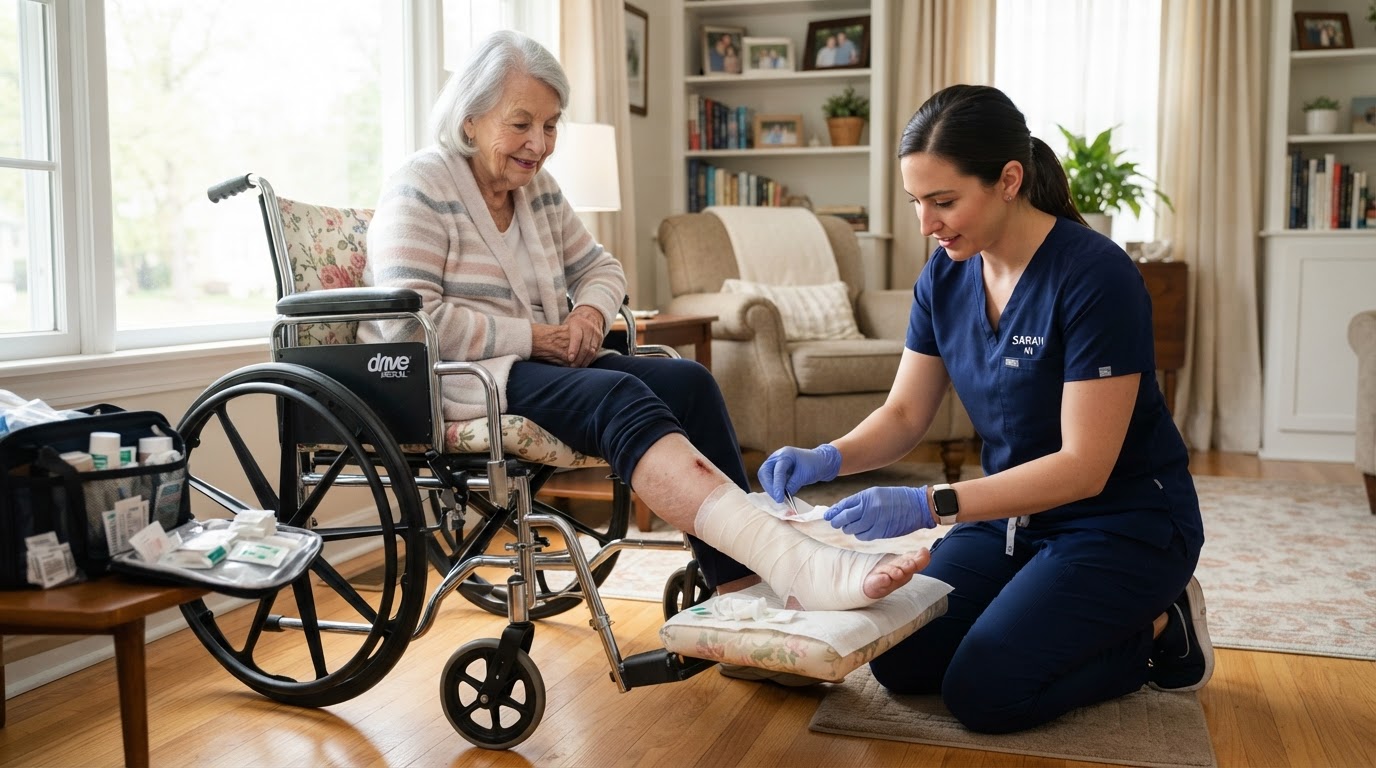
When a loved one has limited mobility, whether from a stroke, advanced age, or a chronic condition, getting to a wound clinic is often the hardest part of treatment. The drive, the waiting room, the transfer in and out of a vehicle, all of it can turn a simple dressing change into an exhausting half-day ordeal. For many Miami-Dade families, the answer is bringing the care home instead.
This guide covers practical ways to manage wound care at home when a patient uses a wheelchair, a walker, or is bed-bound. Wound Care Miami-Dade connects families with licensed, insured in-home wound care providers who specialize in treating patients exactly where they are most comfortable.
Why Limited Mobility Changes Wound Care
Limited mobility affects wound healing in two ways. First, it increases the risk of certain wounds. Patients who sit or lie in one position for long periods are far more likely to develop pressure ulcers, because sustained pressure cuts off blood flow to the skin over bony areas. Second, poor circulation in the legs slows healing of existing wounds, especially venous ulcers and diabetic foot ulcers.
Understanding these risks is the first step. The next is setting up the home so that healing can actually happen.
Setting Up the Home for Healing
A few simple adjustments make wound care at home safer and more effective for patients with limited mobility:
- Choose a stable surface. A firm bed or a recliner with good back support is better than a soft couch for dressing changes. The surface should let the provider reach the wound easily.
- Improve lighting. Bright, direct light helps the nurse assess the wound accurately. A simple floor lamp near the care area makes a real difference.
- Clear a path. Make sure the provider can bring in supplies and equipment without navigating clutter. If you live in an apartment in Miami Beach, share parking and building access instructions in advance.
- Keep supplies together. A small caddy with gloves, saline, gauze, and tape keeps everything within reach. Read our guide on wound care equipment and supplies for a full checklist.
Preventing Pressure Ulcers When Mobility Is Limited
Prevention is always easier than treatment. If your loved one spends most of the day in a wheelchair or bed, a regular repositioning schedule is essential. The general rule is to shift position at least every two hours, and to use pressure-relieving cushions or mattresses. For a deeper dive, see our caregiver's guide to preventing bedsores.
Check the skin daily over bony areas like the tailbone, hips, heels, and shoulders. Look for redness that does not fade when pressed, or areas that feel warmer or firmer than the surrounding skin. Catching these early signs prevents a small problem from becoming a serious wound.
Managing Circulation and Swelling
For patients with leg wounds, elevation and compression are often part of the care plan. If the physician has ordered compression bandages or stockings, make sure they are applied correctly and removed as directed. Elevation above the level of the heart, even for short periods during the day, helps reduce swelling and improve blood return.
Encourage gentle movement where possible. Even small ankle pumps or assisted range-of-motion exercises, done with physician approval, help keep blood flowing. The National Institute on Aging offers helpful guidance on safe movement for older adults with limited mobility.
Coordinating with the In-Home Provider
One of the biggest advantages of in-home care for patients with limited mobility is continuity. The same licensed nurse visits regularly, tracks the wound's progress, and adjusts the care plan in coordination with the patient's physician. There is no need to transport the patient anywhere.
For families in Kendall, Doral, or anywhere else in the county, the providers we connect you with accept Original Medicare Part B, Preferred Care Partners, UnitedHealthcare Dual Complete, and WellCare, so coverage is usually straightforward.
Supporting the Caregiver
Caring for someone with limited mobility is demanding. Do not hesitate to ask the in-home nurse to teach you specific techniques, like how to reposition safely or how to recognize early skin changes. The Family Caregiver Alliance also offers free resources on managing caregiver stress and finding respite support.
Ready to Start Healing?
Limited mobility does not have to mean limited care. With the right home setup, a consistent prevention routine, and a licensed in-home provider, patients with limited mobility can heal safely and comfortably at home.
Wound Care Miami-Dade is here to connect you with experienced, licensed, and insured in-home wound care providers who understand the unique needs of patients with limited mobility.
Call (786) 882-2666 - we'll verify your insurance, and a nurse can often visit within 24-48 hours.