
Skin Tears in Older Adults: Prevention and Home Care in Miami-Dade
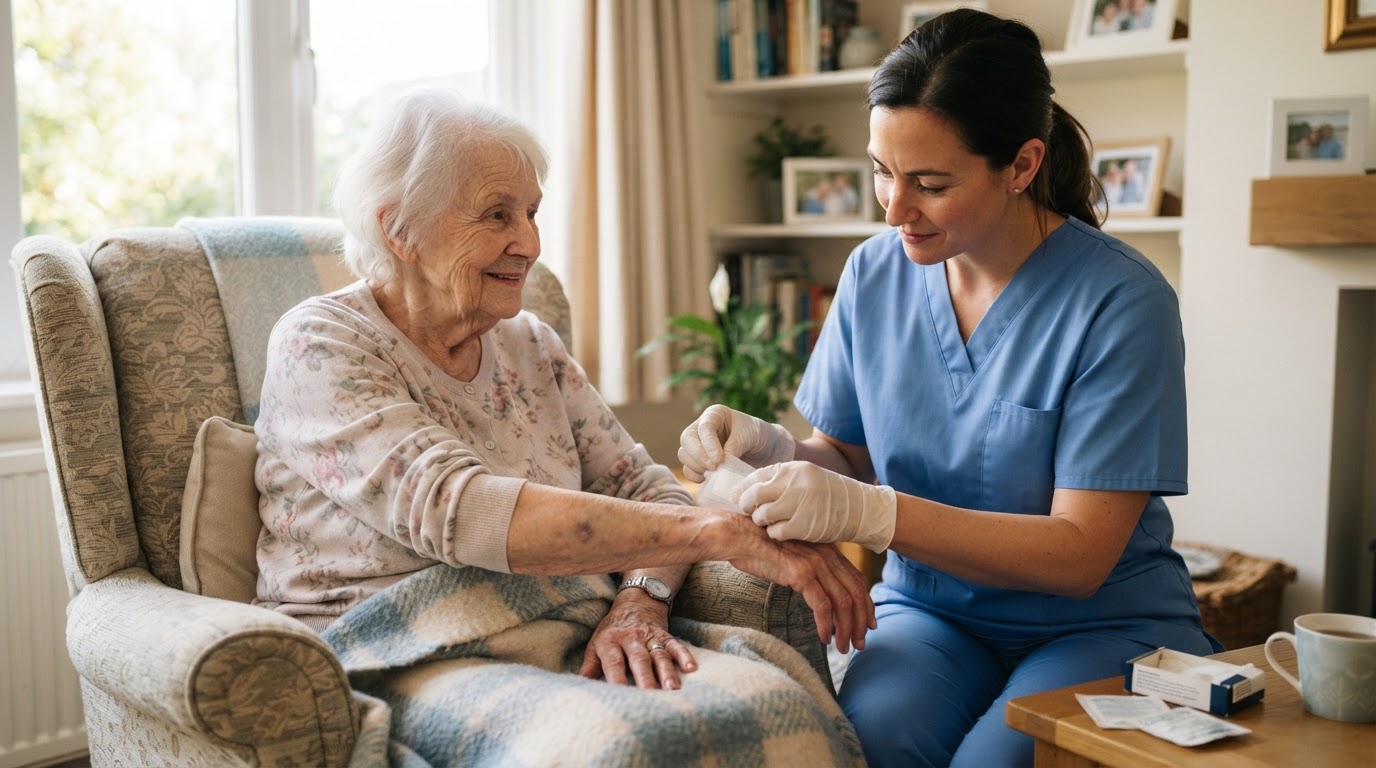
Skin Tears in Older Adults: Prevention and Home Care in Miami-Dade
A skin tear may sound minor, but for an older adult it can be surprisingly painful and slow to heal. As skin ages, it becomes thinner, drier, and more fragile, so even a gentle bump against a table edge or a tug from adhesive tape can cause the top layers of skin to separate. For Miami-Dade families caring for aging parents, knowing how to prevent and manage skin tears is an important part of protecting overall skin health.
This guide explains why skin tears happen, how to prevent them, and how to care for them at home. Wound Care Miami-Dade connects families with licensed, insured in-home wound care providers who can treat skin tears and other fragile-skin wounds in the comfort of home.
Why Older Adults Are at Higher Risk
Aging skin loses two things that keep it resilient: collagen and moisture. Collagen gives skin its strength, and moisture keeps it flexible. Without enough of either, the skin tears more easily and heals more slowly. Other risk factors include:
- Long-term use of corticosteroids, which thin the skin over time
- Poor nutrition or dehydration, which weakens skin integrity
- Limited mobility, which increases the chance of bumps and friction
- Cognitive changes that make a person less aware of minor injuries
The American Academy of Dermatology offers helpful guidance on protecting aging skin, especially in warm, humid climates like South Florida's.
Preventing Skin Tears
Most skin tears are preventable with a few simple habits:
- Moisturize daily. Apply a fragrance-free lotion to arms and legs twice a day to keep skin supple. Avoid lotion between the toes.
- Pad sharp edges. Cover the corners of furniture, bed rails, and wheelchair parts that the patient frequently brushes against.
- Use gentle adhesives. Choose medical tapes designed for fragile skin, and remove them slowly in the direction of hair growth. Never rip tape off quickly.
- Dress protectively. Long sleeves and long pants add a layer of protection against bumps and scratches, even indoors.
- Keep the home well-lit and clutter-free. Good lighting and clear walkways reduce the chance of bumping into furniture. This also supports fall prevention.
Caring for a Skin Tear at Home
If a skin tear happens, stay calm and follow these steps:
- Stop any bleeding. Apply gentle pressure with a clean cloth or gauze.
- Gently rinse. Clean the area with saline or cool running water. Do not use hydrogen peroxide or rubbing alcohol, which damage fragile tissue.
- Approximate the skin flap. If a skin flap is present, gently roll it back into place over the wound bed, like closing a book. Do not cut the flap off.
- Apply a non-adherent dressing. Use a silicone or petrolatum-based dressing that will not stick to the wound. This prevents further tearing when the dressing is changed.
- Protect and monitor. Secure the dressing loosely and check daily for signs of infection.
For a deeper overview of home wound care basics, see our guide on wound care equipment and supplies.
When to Call a Professional
Many skin tears heal at home, but some need professional care. Contact a provider if:
- The tear is large or the skin flap cannot be replaced
- There is heavy bleeding that does not stop with gentle pressure
- You see signs of infection: spreading redness, warmth, pus, or increasing pain
- The patient has diabetes or poor circulation, which raises the risk of complications
Patients with diabetes are especially vulnerable, as a small skin tear can progress to a more serious diabetic foot ulcer if not managed carefully. The CDC's diabetes foot care resources are a good reference for families managing both conditions.
The Role of In-Home Wound Care
For frail patients, traveling to a clinic for a skin tear can cause more harm than the injury itself. In-home wound care brings a licensed nurse to you, whether you live in Miami Gardens, North Miami, or anywhere in the county. The nurse selects the right dressing, monitors healing, and teaches caregivers how to prevent future tears.
The providers we connect you with accept Original Medicare Part B, Preferred Care Partners, UnitedHealthcare Dual Complete, and WellCare, so coverage is typically straightforward.
Ready to Start Healing?
Skin tears are common in older adults, but they are also largely preventable and very treatable. With daily moisturizing, gentle handling, and the right dressings, you can protect fragile skin and help it heal quickly.
If you or a loved one needs help caring for a skin tear or other fragile-skin wound, Wound Care Miami-Dade is here to connect you with licensed, insured in-home providers.
Call (786) 882-2666 - we'll verify your insurance, and a nurse can often visit within 24-48 hours.