
Aging Skin and Slow Healing: In-Home Wound Care for Miami-Dade Seniors
Aging Skin and Slow Healing: In-Home Wound Care for Miami-Dade Seniors
It is a fact of aging: the older we get, the more slowly our skin heals. A scrape that once closed in a few days may now take weeks. A minor pressure spot can develop into a serious ulcer. For Miami-Dade families caring for aging parents, understanding why healing slows with age, and what to do about it, is key to preventing small problems from becoming serious wounds.
This guide explains how aging affects wound healing and offers practical steps seniors and caregivers can take at home. Wound Care Miami-Dade connects families with licensed, insured in-home wound care providers who specialize in caring for older adults.
Why Healing Slows with Age
Several age-related changes affect how skin heals:
- Thinner skin. The outer layer loses thickness and the fat cushion beneath it shrinks, making skin more fragile and prone to injury.
- Slower cell turnover. New skin cells are produced more slowly, so wounds close at a reduced rate.
- Reduced circulation. Blood flow to the skin decreases with age, delivering less oxygen and fewer nutrients to the wound site.
- Weakened immune response. Older adults are more susceptible to infection, which can stall healing.
- Chronic conditions. Diabetes, heart disease, and vascular disease, all more common with age, further impair healing.
These factors mean that a wound an older adult might shrug off can quietly worsen. Understanding the normal wound healing timeline helps families recognize when healing is too slow.
Common Wounds in Older Adults
Seniors are particularly vulnerable to certain types of wounds:
- Pressure ulcers from limited mobility
- Diabetic foot ulcers in patients with diabetes
- Venous ulcers from poor leg circulation
- Skin tears and minor injuries that heal slowly, as covered in our guide on skin tears in older adults
Supporting Healing at Home
While aging slows healing, families can take concrete steps to support it:
Nutrition
Healing requires protein, calories, vitamins, and minerals. Many older adults eat less than they used to, so focus on nutrient-dense foods and consider supplements if a physician recommends them. See our guide on nutrition for wound healing for practical meal ideas.
Hydration
Older adults often have a reduced sense of thirst. Encourage regular fluid intake throughout the day, especially in South Florida's warm climate. The CDC healthy aging resources offer guidance on hydration and wellness for seniors.
Skin Care
Moisturize daily with fragrance-free lotion to maintain skin integrity. Keep skin clean and dry, and check it daily for early signs of breakdown.
Mobility and Positioning
For patients with limited mobility, a regular repositioning schedule prevents pressure ulcers. Read our caregiver's guide to preventing bedsores for a complete routine.
Blood Sugar and Medication Management
For patients with diabetes, keeping blood sugar controlled is one of the most important factors in wound healing. Review all medications with a physician, as some drugs, like corticosteroids, can slow healing.
When to Bring in Professional Care
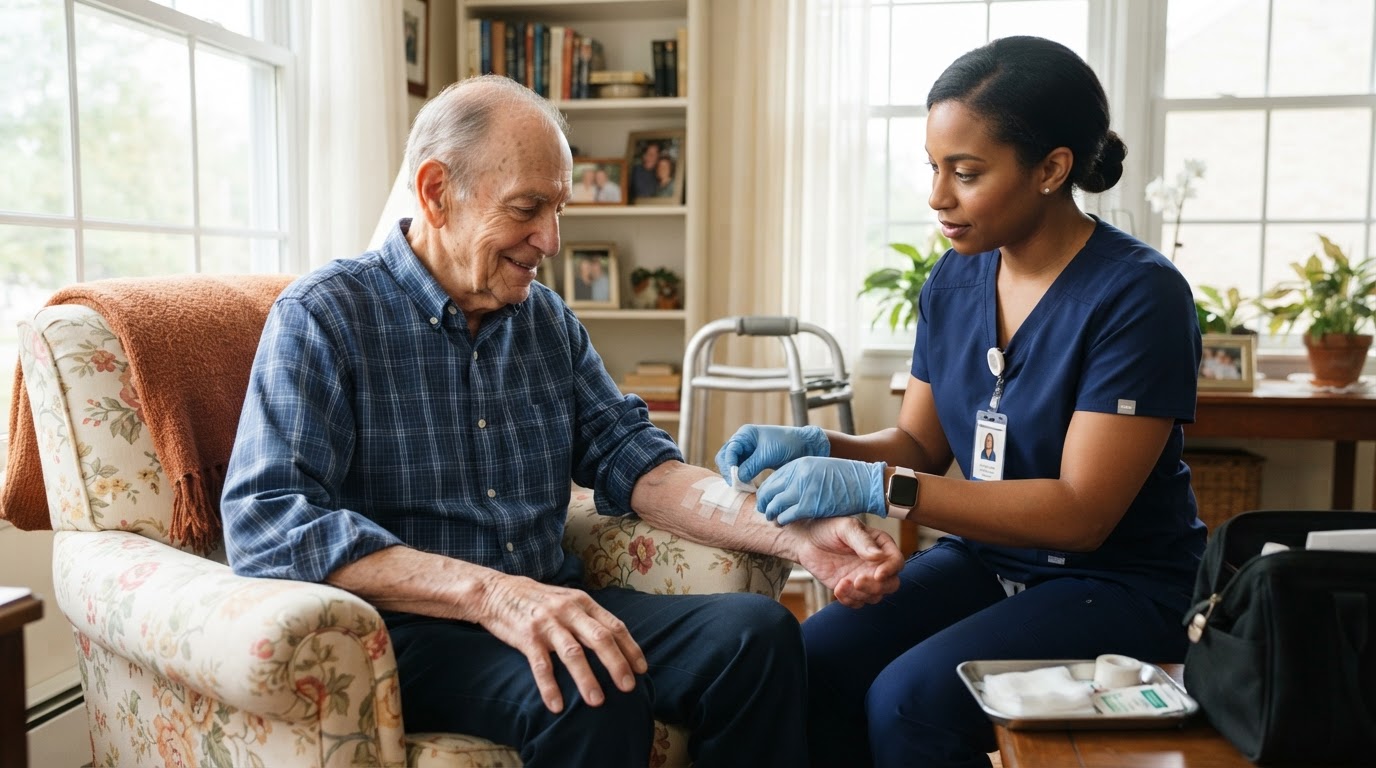
Because older adults heal more slowly, professional monitoring is valuable. A licensed in-home wound care provider visits regularly, measures the wound, and catches problems early. For families in Coral Gables, Aventura, or anywhere in Miami-Dade, this means expert care without the strain of travel.
The National Institute on Aging is a trusted resource for understanding how aging affects health and recovery.
The Advantage of In-Home Care for Seniors
Traveling to a clinic is often the biggest barrier for seniors with wounds. In-home care removes that barrier entirely. The nurse comes to the patient, follows the physician's orders, and coordinates with the family. The providers we connect you with accept Original Medicare Part B, Preferred Care Partners, UnitedHealthcare Dual Complete, and WellCare.
Ready to Start Healing?
Aging may slow healing, but it does not have to stop it. With good nutrition, hydration, skin care, and professional in-home support, older adults can heal safely and comfortably at home.
If you or an aging loved one needs wound care, Wound Care Miami-Dade is here to connect you with licensed, insured providers who understand the needs of seniors.
Call (786) 882-2666 - we'll verify your insurance, and a nurse can often visit within 24-48 hours.