
Pain Management During Wound Healing: What Patients and Caregivers Should Know
Pain Management During Wound Healing: What Patients and Caregivers Should Know
Pain is one of the most stressful parts of living with a wound. It can disrupt sleep, reduce appetite, and make it hard to move, all of which actually slow healing. Yet many Miami-Dade families are unsure how to manage wound pain safely at home, especially when the patient is an older adult taking several other medications.
This guide explains what to expect, how to use pain medication safely, and which simple comfort measures make a real difference. Wound Care Miami-Dade connects families with licensed, insured in-home wound care providers who can assess pain as part of every visit and coordinate with your physician.
Understanding Wound Pain
Wound pain is not the same for everyone or for every type of wound. A fresh surgical wound often hurts most in the first few days and then gradually improves. A chronic wound, such as a venous ulcer or arterial ulcer, may cause a dull ache, burning, or throbbing that comes and goes. Procedures like debridement can cause temporary discomfort during and after treatment.
Pain that suddenly increases after it had been improving is a red flag. It can signal an infection or a complication. Read our guide on recognizing wound infection to learn the warning signs.
Using Pain Medication Safely
Medication is often part of a wound pain plan, but it must be used carefully, especially for seniors. Follow these principles:
- Take medication as prescribed. Do not skip doses and then wait until pain is severe. Staying ahead of pain is easier than catching up with it.
- Never mix medications without asking. Over-the-counter pain relievers can interact with prescriptions. For example, taking ibuprofen on top of a prescribed blood thinner can be dangerous. Always check with your physician or pharmacist first.
- Watch for side effects. Opioids and some other pain medications can cause drowsiness, dizziness, or constipation, which raises fall risk. The MedlinePlus resource from the National Library of Medicine is a reliable place to check medication side effects and interactions.
- Keep an updated list. Bring a complete medication list to every in-home visit so the nurse can spot potential problems.
Non-Medication Comfort Measures
Medication is not the only tool. Several simple, drug-free strategies reduce wound pain and anxiety:
- Positioning. Elevating a leg wound reduces swelling and throbbing. Avoid lying directly on a wound whenever possible.
- Dressing choices. Some dressings are designed to be non-adherent, meaning they do not stick to the wound bed and cause pain on removal. Your in-home provider can select the right dressing for sensitive wounds.
- Temperature. A cool, clean cloth near, but not on, an inflamed area can ease burning sensations. Never apply ice directly to a wound.
- Distraction and relaxation. Calm music, slow breathing, or simply talking with a caregiver during a dressing change can lower the perception of pain.
Pain During Dressing Changes
Dressing changes are often the most painful moments in wound care. If a dressing is sticking, do not force it. Soaking it gently with saline helps it release with less pain. The licensed providers we connect you with use techniques and modern dressings that minimize trauma to the wound bed.
If dressing changes are consistently painful, ask your physician whether a pain medication can be taken 30 to 60 minutes before the scheduled change. This small step makes a big difference for patients with sensitive wounds like pressure ulcers.
When Pain Signals a Problem
Call your physician or in-home provider promptly if you notice any of the following:
- Pain that suddenly worsens after improving
- New or spreading redness, warmth, or swelling
- Pain accompanied by fever or chills
- Foul-smelling drainage or a change in wound color
These can indicate an infection or other complication that needs immediate attention. The National Institute on Aging provides additional guidance on recognizing pain and health changes in older adults.
How In-Home Care Helps Manage Pain
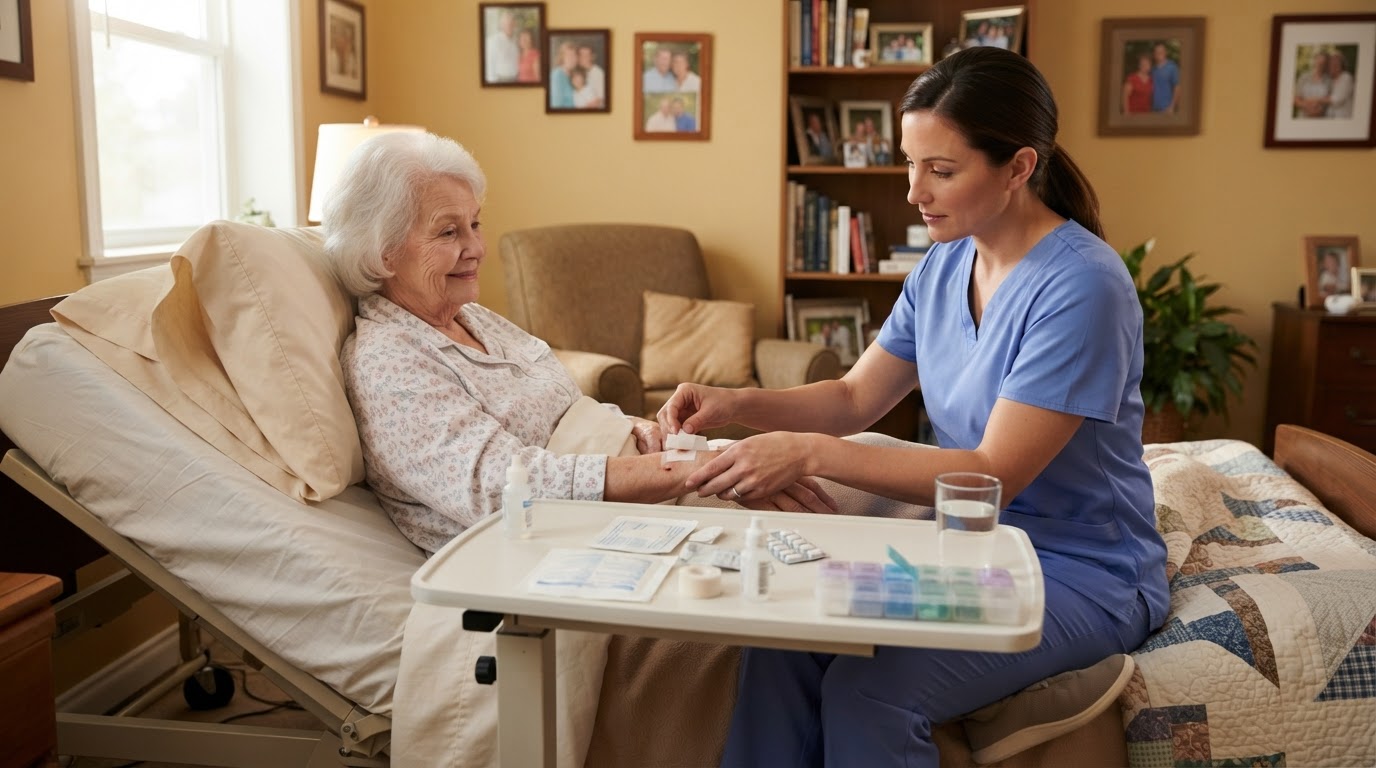
One of the advantages of in-home wound care is that the same nurse sees the patient regularly and can track pain patterns over time. If a wound is not becoming less painful as expected, the nurse can flag it to the physician and adjust the plan. For families in Coral Gables or Pinecrest, this means consistent, attentive care without leaving home.
Ready to Start Healing?
Managing wound pain is about more than comfort. Good pain control helps patients sleep, eat, and move, all of which support faster healing. By using medication safely, adding simple comfort measures, and staying alert to warning signs, you can keep recovery on track.
If you or a loved one needs help managing wound care at home, Wound Care Miami-Dade is here to connect you with licensed, insured providers who treat pain as part of the whole healing picture.
Call (786) 882-2666 - we'll verify your insurance, and a nurse can often visit within 24-48 hours.