
When a Wound Isn't Healing: Steps to Take Before It Becomes an Emergency
When a Wound Isn't Healing: Steps to Take Before It Becomes an Emergency
Most wounds follow a predictable path: they stop bleeding, begin to close, and gradually heal over a few weeks. But some wounds stall. They stay the same size, change color, or even grow larger. For a family watching this happen, it is easy to feel helpless. The good news is that a stalled wound is usually a signal, not a dead end, and there are clear steps you can take before it becomes an emergency.
This guide walks through what to do when a wound is not healing. Wound Care Miami-Dade connects families with licensed, insured in-home wound care providers who can assess stalled wounds and restart the healing process at home.
How to Tell a Wound Is Stalled
Healing is not always perfectly steady, but certain signs suggest a wound has stopped progressing. Look for:
- No visible change in size or depth after two weeks
- The wound is getting larger or deeper instead of smaller
- The wound bed looks black, yellow, or pale instead of pink or red
- Increased drainage, a new odor, or increasing pain
- The skin around the wound becoming more red, warm, or swollen
If you notice any of these, it is time to act. Understanding the normal wound healing timeline helps you recognize when something is off.
Step 1: Call Your Physician
The first call should always be to the physician who oversees the patient's care. A stalled wound often needs a professional assessment to identify the cause. The physician may adjust the care plan, order new treatments, or refer you to in-home wound care. In-home care requires a physician's order, so this step is essential. Our guide on talking to your doctor about in-home wound care can help you prepare for that conversation.
Step 2: Identify the Underlying Cause
Wounds stall for a reason. Common causes include:
- Infection. An infection keeps the wound trapped in the inflammatory phase. Learn the warning signs in our guide on recognizing wound infection.
- Poor circulation. Conditions like peripheral artery disease or venous insufficiency limit the oxygen and nutrients reaching the wound. This is common with arterial ulcers and venous ulcers.
- Uncontrolled blood sugar. High glucose levels impair healing, especially in diabetic foot ulcers.
- Dead tissue. Necrotic tissue blocks new growth and may need debridement to restart healing.
- Poor nutrition or dehydration. The body needs protein, vitamins, and fluids to rebuild tissue. See our guide on nutrition for wound healing.
Step 3: Get a Professional Assessment at Home
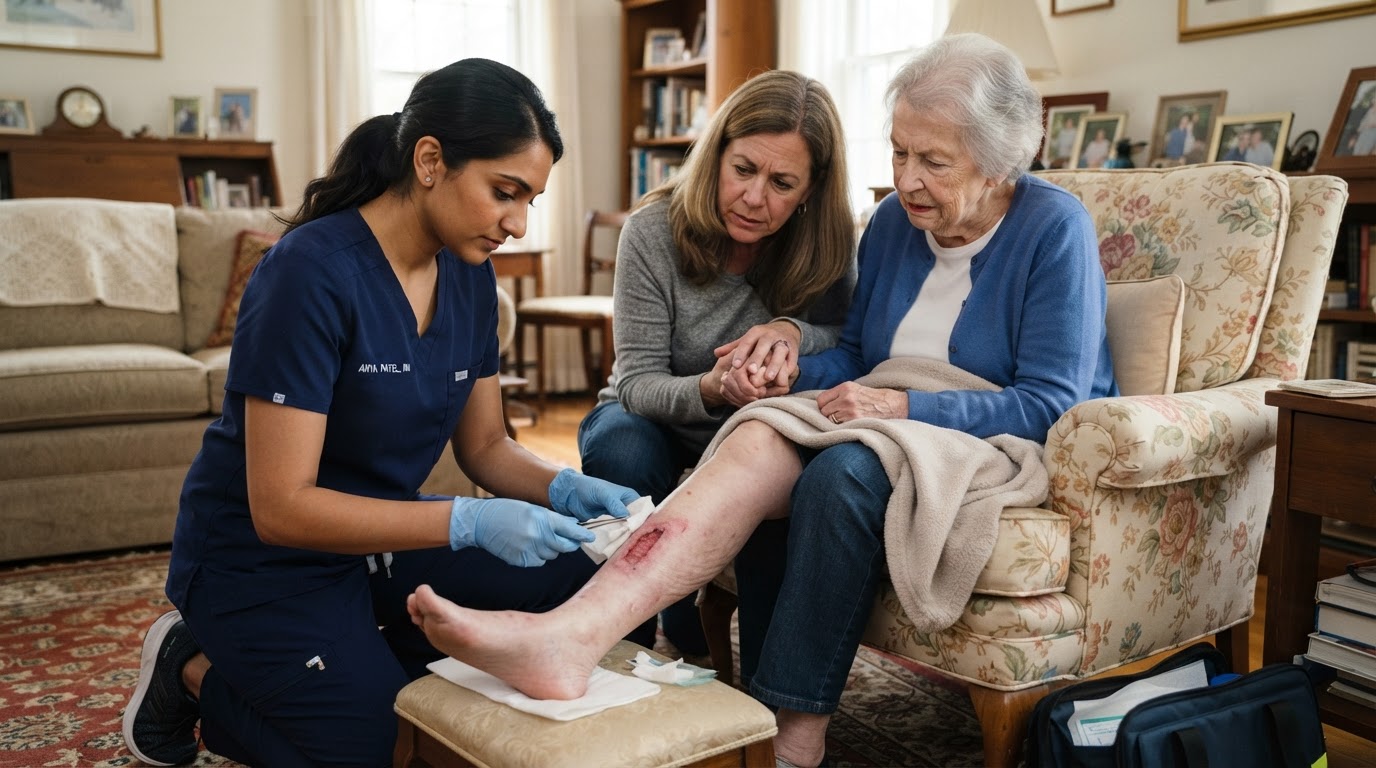
For many Miami-Dade families, traveling to a clinic with a non-healing wound is difficult and uncomfortable. In-home wound care brings a licensed nurse directly to you, whether you live in Miami, Hialeah, or elsewhere in the county. The nurse measures the wound, photographs it for comparison, and works with your physician to adjust the treatment plan.
Advanced options like wound VAC therapy or specialized dressings can often restart a stalled wound without a hospital visit.
Step 4: Support Healing from the Inside
While the clinical team handles the wound itself, families can support healing through nutrition, hydration, and positioning. A protein-rich diet, plenty of fluids, and keeping pressure off the wound all help. For patients with limited mobility, regular repositioning prevents new wounds from forming. Read our caregiver's guide to preventing bedsores for a repositioning schedule.
When to Seek Emergency Care
Some signs mean you should not wait for the next scheduled visit. Go to an emergency room or call 911 if you notice:
- Fever, chills, or confusion
- Red streaks spreading from the wound
- Rapidly increasing pain, swelling, or warmth
- Heavy bleeding that does not stop with gentle pressure
- A foul smell with significant drainage
The MedlinePlus wound care resources and the CDC provide additional guidance on recognizing serious wound complications.
How In-Home Care Prevents Emergencies
Consistent in-home monitoring catches problems early, before they become emergencies. The same nurse visits regularly, tracks progress, and communicates with the physician. This continuity is what keeps small changes from turning into hospital trips. The providers we connect you with accept Original Medicare Part B, Preferred Care Partners, UnitedHealthcare Dual Complete, and WellCare.
Ready to Start Healing?
A wound that is not healing is a call to action, not a reason to panic. By contacting your physician, identifying the cause, and bringing in professional in-home care, you can get healing back on track before an emergency develops.
Wound Care Miami-Dade is here to connect you with licensed, insured providers who specialize in stalled and complex wounds.
Call (786) 882-2666 - we'll verify your insurance, and a nurse can often visit within 24-48 hours.